Advice to young programmers

Click Here to visit Zonix’s Website

(This is the summary of speech Given by Alex Stepenov (Principal Scientist, Adobe Systems) at Adobe India on 30 Nov 2004. )

1. Study , Study and Study

– Never ever think that you have acquired all or most of the knowledge which exists in the world. Almost everybody in US at age of 14 and everybody in India at age of 24 starts thinking that he has acquired all the wisdom and knowledge that he needs. This should be strictly avoided.

– You should be habituated to studies…exactly in the same way as you are habituated to brushing teeth and taking bath every morning. The habit of study must become a ‘part of your blood’. And the study should be from both the areas: CS, since it is your profession, and something from non-CS…Something which doesnot relate to your work. This would expand your knowledge in other field too. A regular study, everyday, is extremely essential. It doesnot matter whether you study of 20 minutes of 2 hours, but consistency is a must.

– You should always study basics and fundamentals. There is no point in going for advanced topics. When I was at the age of 24, I wanted to do PhD in program verification, though I was not able to understand anything from that. The basic reason was that my fundamental concepts were not clear. Studying ‘Algebraic Geometry’ is useless if you donot understand basics in Algebra and Geometry. Also, you should always go back and re-read and re-iterate over the fundamental concepts.

What is the exact definition of ‘fundamental’? The stuff which is around for a while and which forms basic part of the concepts can be regarded as more fundamental. Of course, everybody understands what a fundamental means.

– Here are few books which I would strongly recommend that every CS professional should read and understand.

i. “Structure and Interpretation of Computer Programs” by Albenson and Sussman

I personally donot like the material present in this book and I do have some objections about it but this is the best book I have ever seen which explains all the concepts in programming in a clear and excellent way.

This book is available online at http://mitpress.mit.edu/sicp/

ii. Introduction to Computer Architecture: by Hennessy and Patterson.

How many of you have shipped the programs by writing them in assembly? A very good understanding of basics of how a computer operates is what every CS professional must have.

H&P Wrote two books on CA. I am talking about their first book, the introductory text for understanding basic aspects of how a computer works.

Even if you feel that you know whatever is written in that book, donot stop reading. It’s good to revise basics again and again.

iii. “Fundamentals of Programming” by Donald Knuth.

The core of CS is algorithms and Data structures. Every CS professional must have the 3 volumes of Knuth’s Book on programming. It really doesnot matter if you take 30 years of your life to understand what Knuth has written, what is more important is that you read atleast some part of that book everyday without fail.

iv. Introduction to Algorithms by Cormen, Leiserson and Rivest

This book should be read daily to keep your concepts fresh. This is the best book for fundamental concepts in algorithms.

2. Learn Professional Ethics

– As a CS Professional, you are morally obliged to do a good job. What this means is that you are supposed to do your job not for your manager but for yourself. This is already told in Bhagwatgeeta : Doing duties of your life.

– The direct implication of this is: never ever write a bad code. You don’t need to be fastest and run after shipping dates; rather you need to write quality code. Never write junk code. Rewrite it till it is good. Thoroughly test every piece of code that you write. Donot write codes which are “sort of allright”. You might not achieve perfection, but atleast your code should be of good quality.

– Let me quote my own example in this context. You might have heard about STL, The Standard Template Library that ships in with C++ compilers. I wrote it 10 years ago, in 1994. While implementing one of the routines in the STL, namely the “search routine”, I was a bit lazy and instead of writing a good linear order implementation of KMP which was

difficult to code, I wrote a best quadratic implementation. I knew that I could make the search faster by writing a linear-order implementation, but I was lazy and I did not do that. And, after 10 years of my writing STL, exactly the same implementation is still used inside STL and STL ships with an inefficient quadratic implementation of search routine even today!! You might ask me: why can’t you rewrite that? Well…I cannot, because that code is no more my property!! Further, nobody today will be interested in a standalone efficient STL …people would prefer one which automatically ships out with the compiler itself.

– Moral is, you should have aesthetic beauty built inside you. You should “feel” uneasy on writing bad code and should be eager to rewrite the code till it becomes upto the quality. And to the judge the quality, you need to develop sense regarding which algorithms to use under what circumstances.

3. Figure out your Goals

– Always aspire doing bigger things in life

– “Viewing promotion path as your career” is a completely wrong goal. If you are really interested in studying and learning new things, never ever aspire for being a manager. Managers cannot learn and study…they have no time. “Company ladder aspiration” is not what should be important for you.

– You might feel that you want to do certain things which you cannot do till you become a manager. When you become a manager, you will soon realize that now you just cannot do anything!

– You will have a great experience as programmers. But if you care for people and love people, you will never enjoy being a manager…most good managers are reluctant managers. If you see people as people, you cannot survive at management level.

– Always aspire for professional greatness. Our profession is very beautiful because we create abstract models and implement them in reality. There is a big fun in doing that. We have a profession which allows us to do creative things and even gives nice salary for that.

– The three biggest mistakes that people usually make are aiming for money, aiming for promotion and aiming for fame. The moment you get some of these, you aspire for some more…and then there is no end. I donot mean that you shouldnot earn money, but you should understand how much

money would satisfy your needs. Bill Clinton might be the richest person in the world; he is certainly not the happiest. Our lives are far better than his.

– Find your goal, and do best in the job that you have. Understand that what is in your pocket doesnot matter…what is in your brain finally matters. Money and fame donot matter. Knowledge matters.

4. Follow your culture

I have seen the tradition that whatever junk is created in US, it rapidly spreads up in the rest of the world, and India is not an exception for this. This cultural change creates a very strong impact on everybody’s life. Habits of watching spicy Bollywood or Hollywood movies and listening to pop songs and all such stupid stuff gets very easily cultivated in people of your age…but believe me, there is nothing great in that. This all just makes you run away from your culture. And there is no wisdom in running away from your culture. Indian culture, which has great Vedas and stories like Mahabharata and Bhagwatgeeta is really great and even Donald Knuth enjoys reading that. You should understand that fundamental things in Indian culture teach you a lot and you should never forget them.

Finally, I would like to conclude by saying that it’s your life…donot waste it on stupid things…develop your tests, and start the fight.

Courtesy: The Seo Guru, A Software Development Company, Best OOPS Blog Site, Link Submission, Thanks to Shopping  Site for Link Exchanging


Bookmark and Share

Advice to young programmers

Click Here to visit Zonix’s Website

(This is the summary of speech Given by Alex Stepenov (Principal Scientist, Adobe Systems) at Adobe India on 30 Nov 2004. )

1. Study , Study and Study

– Never ever think that you have acquired all or most of the knowledge which exists in the world. Almost everybody in US at age of 14 and everybody in India at age of 24 starts thinking that he has acquired all the wisdom and knowledge that he needs. This should be strictly avoided.

– You should be habituated to studies…exactly in the same way as you are habituated to brushing teeth and taking bath every morning. The habit of study must become a ‘part of your blood’. And the study should be from both the areas: CS, since it is your profession, and something from non-CS…Something which doesnot relate to your work. This would expand your knowledge in other field too. A regular study, everyday, is extremely essential. It doesnot matter whether you study of 20 minutes of 2 hours, but consistency is a must.

– You should always study basics and fundamentals. There is no point in going for advanced topics. When I was at the age of 24, I wanted to do PhD in program verification, though I was not able to understand anything from that. The basic reason was that my fundamental concepts were not clear. Studying ‘Algebraic Geometry’ is useless if you donot understand basics in Algebra and Geometry. Also, you should always go back and re-read and re-iterate over the fundamental concepts.

What is the exact definition of ‘fundamental’? The stuff which is around for a while and which forms basic part of the concepts can be regarded as more fundamental. Of course, everybody understands what a fundamental means.

– Here are few books which I would strongly recommend that every CS professional should read and understand.

i. “Structure and Interpretation of Computer Programs” by Albenson and Sussman

I personally donot like the material present in this book and I do have some objections about it but this is the best book I have ever seen which explains all the concepts in programming in a clear and excellent way.

This book is available online at http://mitpress.mit.edu/sicp/

ii. Introduction to Computer Architecture: by Hennessy and Patterson.

How many of you have shipped the programs by writing them in assembly? A very good understanding of basics of how a computer operates is what every CS professional must have.

H&P Wrote two books on CA. I am talking about their first book, the introductory text for understanding basic aspects of how a computer works.

Even if you feel that you know whatever is written in that book, donot stop reading. It’s good to revise basics again and again.

iii. “Fundamentals of Programming” by Donald Knuth.

The core of CS is algorithms and Data structures. Every CS professional must have the 3 volumes of Knuth’s Book on programming. It really doesnot matter if you take 30 years of your life to understand what Knuth has written, what is more important is that you read atleast some part of that book everyday without fail.

iv. Introduction to Algorithms by Cormen, Leiserson and Rivest

This book should be read daily to keep your concepts fresh. This is the best book for fundamental concepts in algorithms.

2. Learn Professional Ethics

– As a CS Professional, you are morally obliged to do a good job. What this means is that you are supposed to do your job not for your manager but for yourself. This is already told in Bhagwatgeeta : Doing duties of your life.

– The direct implication of this is: never ever write a bad code. You don’t need to be fastest and run after shipping dates; rather you need to write quality code. Never write junk code. Rewrite it till it is good. Thoroughly test every piece of code that you write. Donot write codes which are “sort of allright”. You might not achieve perfection, but atleast your code should be of good quality.

– Let me quote my own example in this context. You might have heard about STL, The Standard Template Library that ships in with C++ compilers. I wrote it 10 years ago, in 1994. While implementing one of the routines in the STL, namely the “search routine”, I was a bit lazy and instead of writing a good linear order implementation of KMP which was

difficult to code, I wrote a best quadratic implementation. I knew that I could make the search faster by writing a linear-order implementation, but I was lazy and I did not do that. And, after 10 years of my writing STL, exactly the same implementation is still used inside STL and STL ships with an inefficient quadratic implementation of search routine even today!! You might ask me: why can’t you rewrite that? Well…I cannot, because that code is no more my property!! Further, nobody today will be interested in a standalone efficient STL …people would prefer one which automatically ships out with the compiler itself.

– Moral is, you should have aesthetic beauty built inside you. You should “feel” uneasy on writing bad code and should be eager to rewrite the code till it becomes upto the quality. And to the judge the quality, you need to develop sense regarding which algorithms to use under what circumstances.

3. Figure out your Goals

– Always aspire doing bigger things in life

– “Viewing promotion path as your career” is a completely wrong goal. If you are really interested in studying and learning new things, never ever aspire for being a manager. Managers cannot learn and study…they have no time. “Company ladder aspiration” is not what should be important for you.

– You might feel that you want to do certain things which you cannot do till you become a manager. When you become a manager, you will soon realize that now you just cannot do anything!

– You will have a great experience as programmers. But if you care for people and love people, you will never enjoy being a manager…most good managers are reluctant managers. If you see people as people, you cannot survive at management level.

– Always aspire for professional greatness. Our profession is very beautiful because we create abstract models and implement them in reality. There is a big fun in doing that. We have a profession which allows us to do creative things and even gives nice salary for that.

– The three biggest mistakes that people usually make are aiming for money, aiming for promotion and aiming for fame. The moment you get some of these, you aspire for some more…and then there is no end. I donot mean that you shouldnot earn money, but you should understand how much

money would satisfy your needs. Bill Clinton might be the richest person in the world; he is certainly not the happiest. Our lives are far better than his.

– Find your goal, and do best in the job that you have. Understand that what is in your pocket doesnot matter…what is in your brain finally matters. Money and fame donot matter. Knowledge matters.

4. Follow your culture

I have seen the tradition that whatever junk is created in US, it rapidly spreads up in the rest of the world, and India is not an exception for this. This cultural change creates a very strong impact on everybody’s life. Habits of watching spicy Bollywood or Hollywood movies and listening to pop songs and all such stupid stuff gets very easily cultivated in people of your age…but believe me, there is nothing great in that. This all just makes you run away from your culture. And there is no wisdom in running away from your culture. Indian culture, which has great Vedas and stories like Mahabharata and Bhagwatgeeta is really great and even Donald Knuth enjoys reading that. You should understand that fundamental things in Indian culture teach you a lot and you should never forget them.

Finally, I would like to conclude by saying that it’s your life…donot waste it on stupid things…develop your tests, and start the fight.

Courtesy: The Seo Guru, A Software Development Company, Best OOPS Blog Site, Link Submission, Thanks to Shopping  Site for Link Exchanging

Bookmark and Share

Passing lists to SQL server stored procedures

Click Here to visit Zonix’s Website

Article is about:

The ability to pass “a list of values” from .Net as a parameter to a T-SQL based stored procedure.

Scenarios:

There are lots of scenarios where we need to pass a list of values to save in database. Here’s a couple of obvious ones:

INSERT a list of values into the database in one “chunky” call (e.g. some IDs from a CheckBoxList)
SELECT rows where IDs are IN ()
Some general Approaches:

Taking the INSERT statements as an example, there are various general approaches that we adopt to achieve the desired result:

Use dynamic / Inline SQL! But ideally say, dynamic / Inline SQL is rarely the ideal solution for obvious reasons.
Make a stored proc call for each ID to insert. This is the most common approach we see in various projects, mainly because it is the easiest to implement. The drawback of course is if we were to insert 60 values, it would result in 60 “chatty” calls to the database.
Pass comma separated values via a VARCHAR (or similar) parameter. This works fine but has messy “string splitting” in the stored procedure to extract the IDs and then build the SQL statement in the procedure itself. Prone to SQL injection and not the best performance.
Pass the list as an XML parameter. This is nicer and is the point of this article.
Coming to the main Point, Using XML:

Using XML for “list passing” has a number of benefits, in particular the ability to pass lists of more “complex types” rather than just single values.

Lets take an example. Suppose we are having 2 CheckedListBox; one is list of Users and another is the list of tasks / roles that can be assigned to Users. We want to store the values in Table which is having Fields UserID and TaskID. The Stored Procedure will accept Parameter with XML Datatype as,

CREATE PROCEDURE [dbo].[usp_InsertUserTask]
@UserTaskXML XML
AS
BEGIN
INSERT INTO UserTasks (UserID,TaskID)
SELECT
UserTaskTab.UserTaskCol.value(‘UserID[1]’,’int’) AS UserID,
UserTaskTab.UserTaskCol.value(‘TaskID[1]’,’int’) AS TaskID
FROM @UserTaskXML.nodes(‘//UserTaskList/UserTaskData’) AS UserTaskTab(UserTaskCol)
END

To call this in Stored Procedure, you would have something like this:

EXEC [dbo].[usp_InsertUserTask]
@UserTaskXML = ‘

1
100

2
200

In your application, your C# calling code could be:

SqlConnection sqlCN = new SqlConnection();
sqlCN.ConnectionString = ConfigurationManager.AppSettings[“DBConn”].ToString();
string strQuery = “usp_InsertUserTask”;
SqlParameter[] sqlParams = new SqlParameter[1];
sqlParams[0] = new SqlParameter(“@UserTaskXML”, GetStudyDataXMLString());
SqlHelper.ExecuteNonQuery(sqlCN, CommandType.StoredProcedure, strQuery, sqlParams);
if (sqlCN.State == ConnectionState.Open)
sqlCN.Close();
sqlCN.Dispose();

which calls the method below to translate the UserID and TaskID from CheckBoxLists into an XML String:

private string GetUserTaskListXML()
{
try
{
StringBuilder XMLString = new StringBuilder();
XMLString.AppendFormat(“”);
for (int iUserCount = 0; iUserCount < UserCheckBoxList.Items.Count; iUserCount++)
{
if(UserCheckBoxList.Items[iUserCount].Selected)
{
for (int iTaskCount = 0; iTaskCount < TaskCheckBoxList.Items.Count; iTaskCount++)
{
if(TaskCheckBoxList.Items[iTaskCount].Selected)
{
XMLString.AppendFormat(“”);
XMLString.AppendFormat(“{0}”, UserCheckBoxList.Items[iUserCount].value);
XMLString.AppendFormat(“”);
}
}
}
}
XMLString.AppendFormat(“”);
}
catch (Exception Ex)
{
throw Ex;
}
return XMLString.ToString();
}

Here, StringBuilder is used for the xml concatenation as in this case I think it fits the bill but purists might prefer an XmlTextWriter approach. In summary, it performs very well and is adaptable for various lists of objects and more complex structures.

Referenced Link:

Passing lists to SQL server stored procedures


Bookmark and Share

Passing lists to SQL server stored procedures

Click Here to visit Zonix’s Website

Article is about:

The ability to pass “a list of values” from .Net as a parameter to a T-SQL based stored procedure.

Scenarios:

There are lots of scenarios where we need to pass a list of values to save in database. Here’s a couple of obvious ones:

INSERT a list of values into the database in one “chunky” call (e.g. some IDs from a CheckBoxList)
SELECT rows where IDs are IN ()
Some general Approaches:

Taking the INSERT statements as an example, there are various general approaches that we adopt to achieve the desired result:

Use dynamic / Inline SQL! But ideally say, dynamic / Inline SQL is rarely the ideal solution for obvious reasons.
Make a stored proc call for each ID to insert. This is the most common approach we see in various projects, mainly because it is the easiest to implement. The drawback of course is if we were to insert 60 values, it would result in 60 “chatty” calls to the database.
Pass comma separated values via a VARCHAR (or similar) parameter. This works fine but has messy “string splitting” in the stored procedure to extract the IDs and then build the SQL statement in the procedure itself. Prone to SQL injection and not the best performance.
Pass the list as an XML parameter. This is nicer and is the point of this article.
Coming to the main Point, Using XML:

Using XML for “list passing” has a number of benefits, in particular the ability to pass lists of more “complex types” rather than just single values.

Lets take an example. Suppose we are having 2 CheckedListBox; one is list of Users and another is the list of tasks / roles that can be assigned to Users. We want to store the values in Table which is having Fields UserID and TaskID. The Stored Procedure will accept Parameter with XML Datatype as,

CREATE PROCEDURE [dbo].[usp_InsertUserTask]
@UserTaskXML XML
AS
BEGIN
INSERT INTO UserTasks (UserID,TaskID)
SELECT
UserTaskTab.UserTaskCol.value(‘UserID[1]’,’int’) AS UserID,
UserTaskTab.UserTaskCol.value(‘TaskID[1]’,’int’) AS TaskID
FROM @UserTaskXML.nodes(‘//UserTaskList/UserTaskData’) AS UserTaskTab(UserTaskCol)
END

To call this in Stored Procedure, you would have something like this:

EXEC [dbo].[usp_InsertUserTask]
@UserTaskXML = ‘

1
100

2
200

In your application, your C# calling code could be:

SqlConnection sqlCN = new SqlConnection();
sqlCN.ConnectionString = ConfigurationManager.AppSettings[“DBConn”].ToString();
string strQuery = “usp_InsertUserTask”;
SqlParameter[] sqlParams = new SqlParameter[1];
sqlParams[0] = new SqlParameter(“@UserTaskXML”, GetStudyDataXMLString());
SqlHelper.ExecuteNonQuery(sqlCN, CommandType.StoredProcedure, strQuery, sqlParams);
if (sqlCN.State == ConnectionState.Open)
sqlCN.Close();
sqlCN.Dispose();

which calls the method below to translate the UserID and TaskID from CheckBoxLists into an XML String:

private string GetUserTaskListXML()
{
try
{
StringBuilder XMLString = new StringBuilder();
XMLString.AppendFormat(“”);
for (int iUserCount = 0; iUserCount < UserCheckBoxList.Items.Count; iUserCount++)
{
if(UserCheckBoxList.Items[iUserCount].Selected)
{
for (int iTaskCount = 0; iTaskCount < TaskCheckBoxList.Items.Count; iTaskCount++)
{
if(TaskCheckBoxList.Items[iTaskCount].Selected)
{
XMLString.AppendFormat(“”);
XMLString.AppendFormat(“{0}”, UserCheckBoxList.Items[iUserCount].value);
XMLString.AppendFormat(“”);
}
}
}
}
XMLString.AppendFormat(“”);
}
catch (Exception Ex)
{
throw Ex;
}
return XMLString.ToString();
}

Here, StringBuilder is used for the xml concatenation as in this case I think it fits the bill but purists might prefer an XmlTextWriter approach. In summary, it performs very well and is adaptable for various lists of objects and more complex structures.

Referenced Link:

Passing lists to SQL server stored procedures


Bookmark and Share

Advantages of Asp.net and Sharepoint – Where to use SharePoint

Click Here to visit Zonix’s Website

Here are some of Advantages/Disadvantages of SharePoint apps over ASP.Net apps:


Advantages:


1. Many built-in features are available with MOSS which can be used to easily develop complex solutions.

2. Rich Security features which come built in.

3. Integrated with Content Management.

4. Very less efforts required to create basic sites with lot of features.

5. It is quite scalable.

6. OOB Integration with Office products.

7. Rich backup techniques

8. Business process can be integrated with Workflows.

9. Multiple sites can be created with the help of templates.


Disadvantages:

1. It is difficult to add custom code in SharePoint. Features and WSP files take time.

2. Difficult to solve the problems in development.

3. Creating ASP.net pages is easy then creating web parts.

4. Cost is very high.

5. Performance for ASP.NET apps is much better.

6. Very few experts are there.


Advantages/Disadvantages of ASP.Net apps over SharePoint apps:


Advantages:


1. Here we have lot of control on application in terms of DB, UI.

2. Less cost to build.

3. Easy to develop and deploy.

4. Plenty of resources.


Disadvantages:

1. Takes lot more time to get same functionality as of SharePoint.

2. There is nothing built in. So every solution needs to start from zero.

3. Good DB knowledge is also required to create sites having data.

4. Security needs to build.

What’s SharePoint Not Good For

Click Here to visit Zonix’s Website

SharePoint is an excellent way to create data-driven web sites, in my opinion, but there are other times where I don’t think it’s the best choice. For example, SharePoint isn’t a substitute for a code management library, such as SourceSafe. (Microsoft is working on this for Visual Studio 2008, however, so watch out!) Also, SharePoint’s integration with Microsoft Office, Windows, and .NET means that users of other operating platforms (Mac, Linux) or non-Microsoft browsers may have problems using the sites.

In particular, SharePoint authentication does not seem to work with Internet Explorer for the Macintosh or Mozilla prior to Version 1.7.2. In addition, SharePoint pages look different in FireFox, Mozilla, and Netscape Navigator than they look in Internet Explorer. You can compare these differences by using different browsers to view public SharePoint sites.

Introduction to SharePoint

Click Here to visit Zonix’s Website

  1. Why Use SharePoint?

a.  SharePoint is a component of Windows 2003 that lets you share Microsoft Office documents with others through web pages. Unlike most web sites, SharePoint sites are designed to be highly dynamic. Team members can easily upload documents, add public announcements, send alerts, track work items, and call meetings right from within Office products. 

2.      What is difference between SharePoint Service and SharePoint Server?

  1.  
    1. A Sharepoint service is freely downloadable.
    2. The Windows SharePoint Services are primarily focused around workgroup level collaboration . The main purpose for SharePoint Portal Server is to act as an enterprise level portal.
    3. SharePoint Portal Server was built on top of the Windows SharePoint Services. This means that anything that the Windows SharePoint Services can do, SharePoint Portal Server can also do. Windows SharePoint Service’s primary focus is to create workspaces that small groups of users can use to collaborate on projects by sharing a small collection of documents and other data. Where for SharePoint Portal Server is to act as an enterprise level portal. SharePoint server has some advance feature like searching like we can search for specific keyword. The results of the search can then be arranged by document author, site, date, and category. SharePoint Portal Server also offers hierarchical search scopes that allow users to perform searches from within specific topics, categories, or content sources.
  2. What is the  OS requirement for Windows SharePoint Service?
    1. Windows server 2003.
  3. What Software Requirements at client side for use sharepoint  services features?
    1. Microsoft Internet Explorer 5.01 with SP2 or later (best results with Microsoft Internet Explorer 5.5 with SP2 or later), Microsoft Internet Explorer 5.2 or later for Macintosh, Netscape Navigator version 6.2 or later, Mozilla 1.4 or later, or Firefox 1.0.4 or later 
  4. What types of configuration available for Sharepoint Services?
    1. There are two types of configuration available for sharepoint services and farm server.

                   i.      stand-alone server: if our requirement is hosting  very few sites  and for small organization

                  ii.      server farm:If we are supporting Web sites in a large organization or as an Internetserviceprovider (ISP), and anticipate heavy usage and a lot of data, we will most likely want to use the server farm configuration.


Bookmark and Share

Introduction to SharePoint

Click Here to visit Zonix’s Website

  1. Why Use SharePoint?

a.  SharePoint is a component of Windows 2003 that lets you share Microsoft Office documents with others through web pages. Unlike most web sites, SharePoint sites are designed to be highly dynamic. Team members can easily upload documents, add public announcements, send alerts, track work items, and call meetings right from within Office products. 

2.      What is difference between SharePoint Service and SharePoint Server?

  1.  
    1. A Sharepoint service is freely downloadable.
    2. The Windows SharePoint Services are primarily focused around workgroup level collaboration . The main purpose for SharePoint Portal Server is to act as an enterprise level portal.
    3. SharePoint Portal Server was built on top of the Windows SharePoint Services. This means that anything that the Windows SharePoint Services can do, SharePoint Portal Server can also do. Windows SharePoint Service’s primary focus is to create workspaces that small groups of users can use to collaborate on projects by sharing a small collection of documents and other data. Where for SharePoint Portal Server is to act as an enterprise level portal. SharePoint server has some advance feature like searching like we can search for specific keyword. The results of the search can then be arranged by document author, site, date, and category. SharePoint Portal Server also offers hierarchical search scopes that allow users to perform searches from within specific topics, categories, or content sources.
  2. What is the  OS requirement for Windows SharePoint Service?
    1. Windows server 2003.
  3. What Software Requirements at client side for use sharepoint  services features?
    1. Microsoft Internet Explorer 5.01 with SP2 or later (best results with Microsoft Internet Explorer 5.5 with SP2 or later), Microsoft Internet Explorer 5.2 or later for Macintosh, Netscape Navigator version 6.2 or later, Mozilla 1.4 or later, or Firefox 1.0.4 or later 
  4. What types of configuration available for Sharepoint Services?
    1. There are two types of configuration available for sharepoint services and farm server.

                   i.      stand-alone server: if our requirement is hosting  very few sites  and for small organization

                  ii.      server farm:If we are supporting Web sites in a large organization or as an Internetserviceprovider (ISP), and anticipate heavy usage and a lot of data, we will most likely want to use the server farm configuration.


Bookmark and Share

Create a Working Map using Google Maps API

Click Here to visit Zonix’s Website

Create a Working Map using Google Maps API


  1. To include a Google map on an online site, you’ll need an API key which is tied to your site URL and your GMail account. First, visit http://www.google.com/apis/maps/signup.html. Make sure to read through the terms of use — there are some uses of the Maps API which are not allowed that you should be aware of.


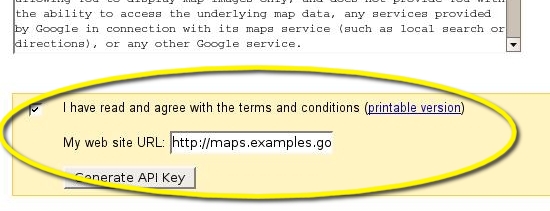
  2. Enter the URL of your website in the ‘My web site URL’ box.It should be a domain name like http://gtl-466/GoogleMapIntegration. Check the box indicating you agree with the terms, then press the ‘Generate API Key’ button.


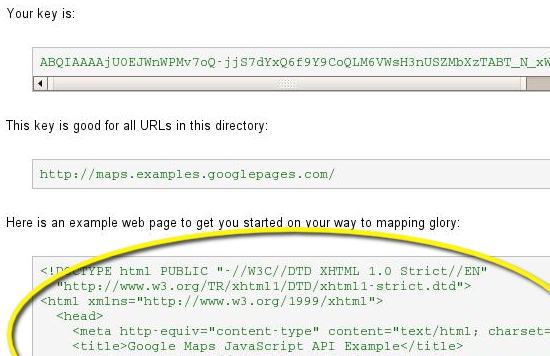
  1. You should now see the sign-up thank you page, which tells you your key (a long string of random characters), the directory/domain it’s valid for, and sample code for your first map which includes your API key. You can see the API key appended to the end of the script tag that loads the Maps API into the page. Keep this page open in your browser.


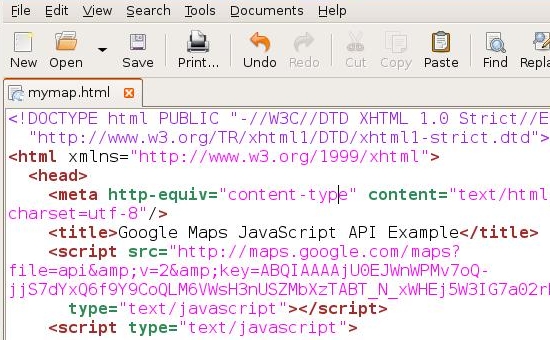
  1. Open a text editor like Notepad on Windows or TextEdit on Macs. Copy and paste the HTML from the thank you page into a blank document, and save it as mymap.html.


  1. It’s time to test it out! Right click on ‘mymap.html’ and select view in browser .Now you’ll see a browser window open up to http://gtl-466/GoogleMapIntegration/mymap.html.If you did all the steps correctly, you should now see a map centered on Palo Alto, California


    If you’re getting an error about the key being registered for a different site, then you probably entered in the wrong URL when you signed up for the API key. Go back to Step 2 of this section and make sure you enter the domain name that you see in the browser window for the page.


    If you’re not seeing a map and are just seeing a blank page, you probably made a copy & paste error. Go back to Step 4, and make sure you copy and paste all and only the HTML given to you in the textbox.


Bookmark and Share


Bookmark and Share